

Vol. 31 No. 344

   Mysore Weather:    Temp Max:  NA  Temp Min: NA   The Editor |  Contact Info | Guestbook        Search  Go
                    Home |  News |  Editorial |  Voice Of the Reader |  Abracadabra |  Hocus Pocus |  Feature Articles |  In Brief |  Sports News |  Todays Toons
       February 5, 2010
 This Evening
  General News
  Editorial
  Voice of the Reader
  Abracadabra
  Hocus Pocus
  Feature Articles
  In Brief
  News Sparklers
  Sports News
  Editor's Bottomline
  Todays Toons

 Archives
  Today
  8 Feb, Monday
  7 Feb, Sunday
  6 Feb, Saturday
  5 Feb, Friday
  4 Feb, Thursday
  3 Feb, Wednesday  


  FEATURE ARTICLES
 
   OVER A CUP OF TEA: WHERE ARE WE HEADING?

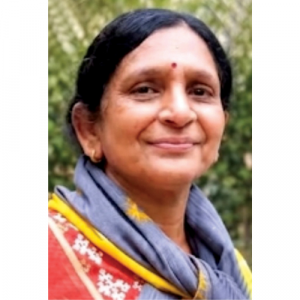
By Dr. K. Javeed Nayeem

Last evening SOM carried a brief article by Bapu Sathyanarayana wherein he has quoted our Police Commissioner’s statement that all citizens should take upon themselves the responsibility of making our city better. In any society there are always some persons who seem to be a little different from the rest of us. They always seem to be attempting to do the impossible. Bapu, who is perhaps very appropriately the namesake of our Mahatma, is one such man who has made it his mission in life to write to change the state of things. I hope he succeeds in his mission.

In his article he has also highlighted the reciprocal responsibility of the government in providing a reasonably good quality of governance to the citizens who pay hefty taxes to sustain it. Among the few examples he has mentioned to illustrate how this responsibility is totally lacking in our administrative setup, he mentions the sorry state of the toilets in the Mysore jail and how when he needed to use one during a visit to the place, he was asked by a Police officer to simply relieve himself against one of the walls there like everybody else.

This suggestion which evoked much chagrin in him provoking him to write about it may seem like an unnecessarily exaggerated response to something that we have all grown accustomed to seeing around us. Yes, pissing against walls like street dogs, right here in the heart of the city, let alone in the countryside, in full view of all those who are not supposed to see you doing it may be a very common sight in our country. But how many of us pause and ponder whether this is how people in the rest of the civilised, if not developed world, do it?

At least, I have not seen anyone doing it in any of the countries I have visited so far, including in neighbouring Sri Lanka where the culture and the economic state of its citizens is not much different from ours. This does not mean to say that people there do not urinate at all. They too do it and they do it just as frequently as we do. But there they do it discreetly using the reasonably well maintained facilities provided by the civic authorities who are vested with the responsibility of doing so. They just consider it anathema to be seen urinating in the open and the act is simply not acceptable even under the most compelling circumstances. While our government may say that toilets have been provided in most public places and government offices what it does not understand is that they need to be kept in a state of reasonable cleanliness if the people have to make use of them. It is for the citizens to insist upon the government to clean up its act.

A few days ago, Dr. B. N. Jayaram, a very reputed plastic surgeon of our city wrote to me enclosing a newspaper clipping with a photograph showing the pathetic state of K. R. Hospital when it was responding to a medical emergency, a job it was supposed to be geared up to handle round-the-clock.

The picture which needs no description, shows patients of food poisoning up to three on each bed, receiving intravenous fluids with their dazed attendants holding up the bottles in their upraised hands due to a shortage of drip stands. Dr. Jayaram who has been trained in the best institutions abroad and has worked in the best hospitals there and has now chosen to settle down and practice in our city has seen how the rest of the world practices medicine and how hospitals there are prepared to expect even the unexpected.

In his letter to me, which is actually a continuation of a conversation which we recently had, he asks whether it is too much for us to expect our government, especially when it thinks nothing of spending crores of rupees simply to renovate our Ministers’ official residences, to provide something as basic as some spare beds and drip stands at our biggest public hospital which is naturally expected to deal with unforeseen emergencies?

In great anguish he states, "Our politicians and leaders whiz around the State in their helicopters to participate in each and every function to inaugurate a cowshed or some such silly thing to gain political mileage at the expense of public money while our masses cry for better roads, better power supply, and drinking water, the basic needs of a decent life. The irony is that they try to please God by hopping from one temple to the other and patronising religious leaders while neglecting their duty to their conscience and their subjects. Where do our priorities lie and where are we heading?

"Our country is in the grip of a cancer, a very virulent one that is sucking at its very soul and substance and this cancer of corruption, nepotism, dishonesty, bickering and infighting will in time suffocate this country to its death if we do not do something drastic to fight it. This drastic measure has to come from the people who should say that they shall not tolerate any more of this injustice.

"But I do not see any such effort by our people and even if it is there it is still very feeble. Perhaps we may have to wait for a very long time before another person, no less than another Ma-hatama, rises to deliver us from this evil."

After reading his letter, I took a deep breath and sat still for a very long time holding his letter in my hands. I felt that he was indeed right. I hope the prayers of all the likes of Dr. Jayaram are answered. But like Ivan Dmitrich Aksio-nov’s long wait in Leo Tolstoy’s story "God sees the truth, but waits," I wonder how long our wait is going to be.

e-mail: kjnmysore@gmail.com

   HOW LONG THE STATE HAS BEEN FACING POWER CRISIS? — 1

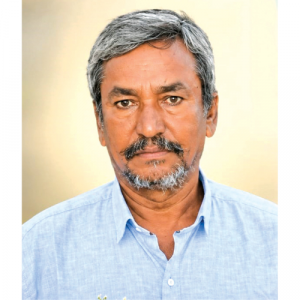
By Dr. Bhamy V. Shenoy

As far as one can remember, Karnataka has been facing power crisis for more than 25 years. Brown outs and black outs have become regular features of the energy scenario whether reservoirs are full or not. Power crisis has become a perennial phenomenon — a State which had power surplus one time has been a power deficit State since a long time. It is likely to remain so unless some basic but politically difficult reforms are implemented as described later, says Dr. Bhamy V. Shenoy, Convenor of Mysore Grahakara Parishat (MGP), in this article which will be published in two parts .—Ed.

Every new Energy Minister irrespective of party affiliation soon after assuming the portfolio makes tall promises to solve power crisis within a short time. As we know there has been no improvement in power scenario.

What is the current demand and supply of electricity in Karnataka?

On a realistic basis, no government agency [Ministry of Energy or Karnataka Energy Regulatory Agency, or power sector companies like KPTCL, KPCL, five Energy Supply Companies (ESCOMs), or NGOs] has any reliable statistics on the supply and demand for power in Karnataka based on any scientific studies. According to the Energy Minister, Karnataka’s electricity demand is supposed to be about 130 million units per day while generating capacity is about 110 million units. Of cou-rse this demand changes with the season and so also the supply. It can be safely assumed that on energy demand basis the deficit is at least 15% or more and based on peak demand deficit for power is more than 18%. In short, Karnataka is unable to generate power to meet either average or peak demand of State.

What is the effect of power crisis? Who are the losers and winners from the power crisis?

It is difficult to estimate with any degree of accuracy the loss to GNP as a result of the power crisis. Still it is a safe bet that actual GNP is at least 15% less than what it would have been if we had a better power situation. Every one including those who have inverters and private generator sets is a loser. Generator sets besides creating noise pollution are also a drain on the foreign exchange by adding to import of crude oil. Especially in this age of internet where one needs continuous supply of electricity for operating many appliances, loss of quality and reliable power will have great impact on productivity of every worker.

Still there are some few winners. Those who sell inverters and generators, oil traders selling diesel, petrol and kerosene to operate these generators are clear winners. Politicians are also winners in unintended ways. They can use their influence to give connection to favoured people even when they do not comply with all the regulations, force ESCOMS in giving unmetered connections, prevent ESCOM employees from disconnecting those who do not pay bills, etc.

Who is in charge of power sector in Karnataka today?

Actually no authority or company can be held accountable for meeting the power needs of Karnataka today. Earlier there was just one company, Karna-taka Electricity Board (KEB) which could have been held accountable for meeting the power needs of the State. On advise of the World Bank, KEB was unbundled into generation, transmission and distribution companies. On paper such an unbundling sounds nice. But in practice it has been a disaster so far with no one having the overall responsibility to plan for the future.

There are various independent power generating companies along with the government owned Karnataka Power Company Ltd (KPCL) and Visweswa-raya Vidyut Nigam Ltd (VVNL). For power transmission there is KPTCL and and for distribution and supply of power we have five energy supply companies — Bangalore ESCOM, Mangalore ESCOM, Chamundeswari ESCOM, Hubli ESCOM and Gulbarga ESCOM.

Essentially it is the State- owned companies which are responsible for power sector in Karnataka and independent power producers (IPPs) have a minor role. In addition since 1999, there is Karnataka Regulatory Energy Commission which is in charge of monitoring the operations of power sector companies and also approving any tariff changes. It has also the responsibility to ensure reliable supply of quality power by ensuring the profitable operations of ESCOMs. KERC was expec-ted to be a powerful body with high expectations. As explained later this has remained on paper.

What are the root causes for power crisis?

There are several reasons for the age old power crisis. The first and foremost is the competitive politics of supplying power below the cost of production to create vote banks. Every one knows that if a shop keeper continues to sell his products below the cost of goods, he would go out of business. This is a basic lesson in economics. But our political leaders who are short term oriented are naturally interested in maximizing their gains and not interested in the long term interests of the State.

The second reason is the political interference in the management of power sector companies.

The third reason is the inefficient operations of all the power sector companies. These are not operated along commercial lines. If they were private stockholder owned companies they would have been closed down a long time back. Their management is not held accountable for supplying quality and reliable power to the consumers.

Finally the apathy on the part of power sector consumers is also responsible for the current power crisis. In a functioning democracy, voters should hold the elected representatives responsible and vote them out.

Those consumers who are rich have already installed private generator sets and are not affected by the power crisis. Even most of the middle class have installed inverters. Thus the relatively well off section of the society has overcome the problem whereas the majority continue to suffer in silence. Earlier years there used to be some protest. Today even that little protest is absent and consumers have accepted the blackout and brownout as their fate. They do not realise that in the 21st century of “shining India” they should get 24 X 7 electricity supply.

KERC has failed miserably in its mandates and has become just another unproductive and inefficient government agency.

Why are transmission and distribution costs are so high?

Transmission costs allowed by KERC is about 4.00% while distribution cost varies between as low as 14% for MESCOM to as high as 26% for GESCOM with an average of 21.5%.

Actually the reason for such a high distribution losses are theft. Actually it could be even higher since consumption in agriculture is just an estimate. Many farmers either do not have meters or their meters are not working. Even after 10 years of the existence of KERC, they have not been able to force the ESCOMs to install meters at the premises of all consumers.

In addition there is also the problem of collecting billed amounts. While collection rates are high for BESCOM and MESCOM they are as low as 85% for some of the other ESCOMS showing how inefficient they are. By international standard T & D losses should be less than 10%. If ESCOMs are restructured to have competent managements, then it should be possible to reduce T & D losses to international standards.

[To be continued tomorrow]

 
News | Editorial | Voice Of the Reader | Abracadabra | Hocus Pocus | Feature Articles | In Brief | Sports News

All rights reserved © 2003-2004, Star Of Mysore
Site Developed & Maintained by InterAxe Technologies